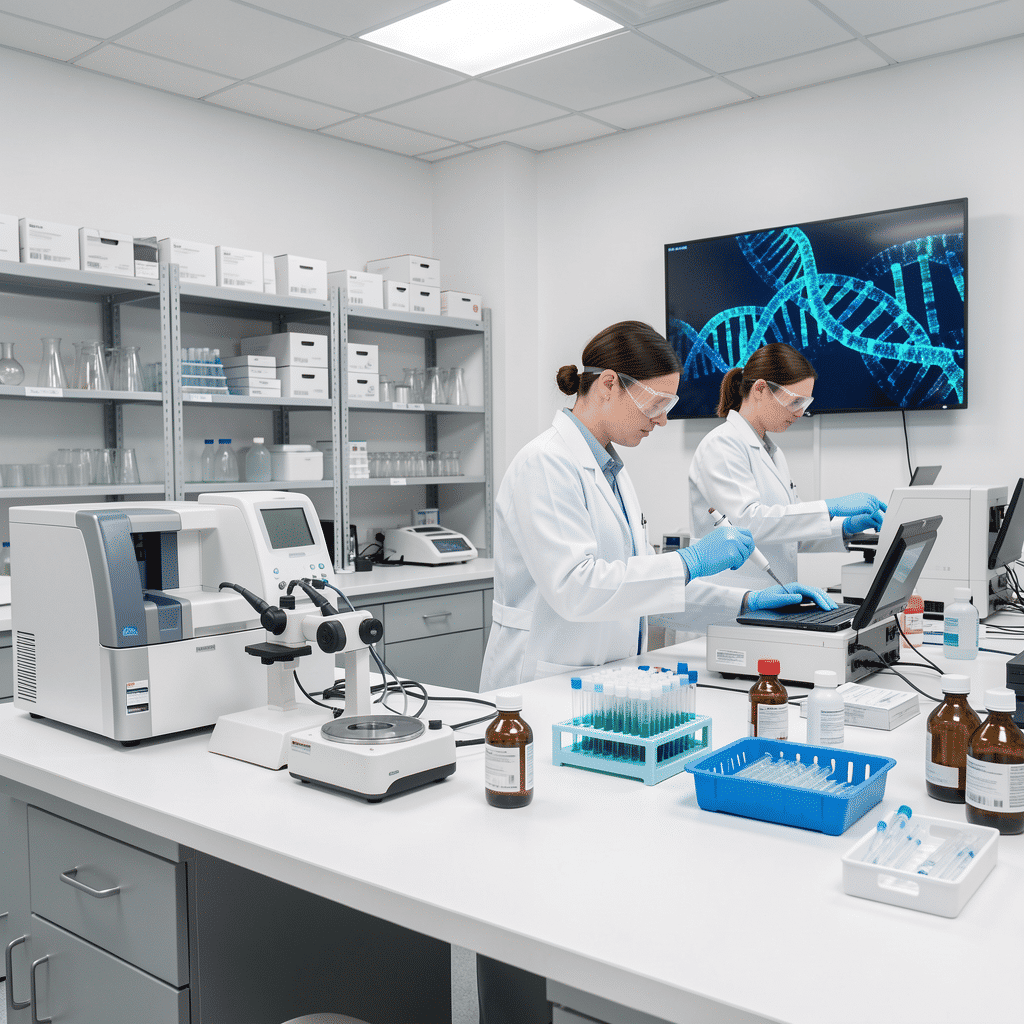
In recent years, the landscape of molecular biology has been dramatically transformed by the advent of advanced molecular techniques. These innovative approaches have not only augmented our understanding of biological processes but have also paved the way for breakthroughs in medicine, agriculture, and environmental science. By leveraging the precision and efficiency of these techniques, researchers are driving innovation and opening new horizons in scientific inquiry.
One of the most transformative techniques is CRISPR-Cas9 genome editing. This revolutionary method allows scientists to make precise, targeted changes to the DNA of living organisms with unprecedented ease and accuracy. By using an RNA-guided enzyme to snip DNA at a specific location, CRISPR-Cas9 can introduce or repair genetic sequences, which has vast implications for disease research and treatment. From correcting mutations responsible for genetic disorders to engineering crops with enhanced resilience, CRISPR-Cas9 is at the forefront of genetic innovation.
Another significant advancement is single-cell RNA sequencing (scRNA-seq), which enables the analysis of gene expression at the individual cell level. This technology provides a comprehensive view of cellular diversity and function within tissues, organs, and entire organisms. By deciphering the complexities of cell populations, researchers can gain insights into developmental biology, cancer progression, and immune responses. The ability to track cellular states and transitions has enormous potential for understanding complex diseases and tailoring personalized medicine.
Next-generation sequencing (NGS) has propelled genomics by allowing researchers to sequence entire genomes rapidly and cost-effectively. As a cornerstone of modern genomics, NGS has revolutionized fields like oncology, infectious disease research, and evolutionary biology. By providing a complete picture of an organism’s genetic makeup, NGS facilitates the identification of genetic variants linked to diseases, the tracking of outbreak origins, and the study of evolutionary relationships on an unprecedented scale.
The integration of these techniques with bioinformatics tools has further amplified their impact. Advanced computational methods are crucial for managing and interpreting the vast amounts of data generated. Machine learning algorithms are increasingly employed to uncover patterns and insights from complex biological datasets, enhancing our understanding of gene interactions, protein functions, and metabolic pathways.
Beyond the laboratory, molecular techniques are beginning to influence real-world applications. In agriculture, gene editing holds promise for developing crops that can withstand environmental stresses such as drought, pests, and disease. In environmental science, molecular tools are used to monitor biodiversity, track species migrations, and assess ecosystem health. These applications demonstrate the versatility of molecular techniques in addressing some of the world's most pressing challenges.
As we stand on the cusp of a new era in molecular science, ethical considerations and regulatory frameworks continue to evolve alongside technological advances. It is crucial to balance innovation with responsibility, ensuring that these powerful techniques are used safely and ethically. Collaborative efforts between scientists, policymakers, and the public are essential to navigate the complex landscape of molecular advancements.
In conclusion, advanced molecular techniques are not merely tools for scientific discovery but are catalysts driving innovation across diverse fields. Their impact is rippling through disciplines, transforming our understanding of biology and offering solutions to challenges in health, agriculture, and the environment. As we continue to harness their potential, these techniques promise to unlock new possibilities and redefine the boundaries of what is achievable in science.